Ishan Ambasta
I solve problems at Alt Carbon.
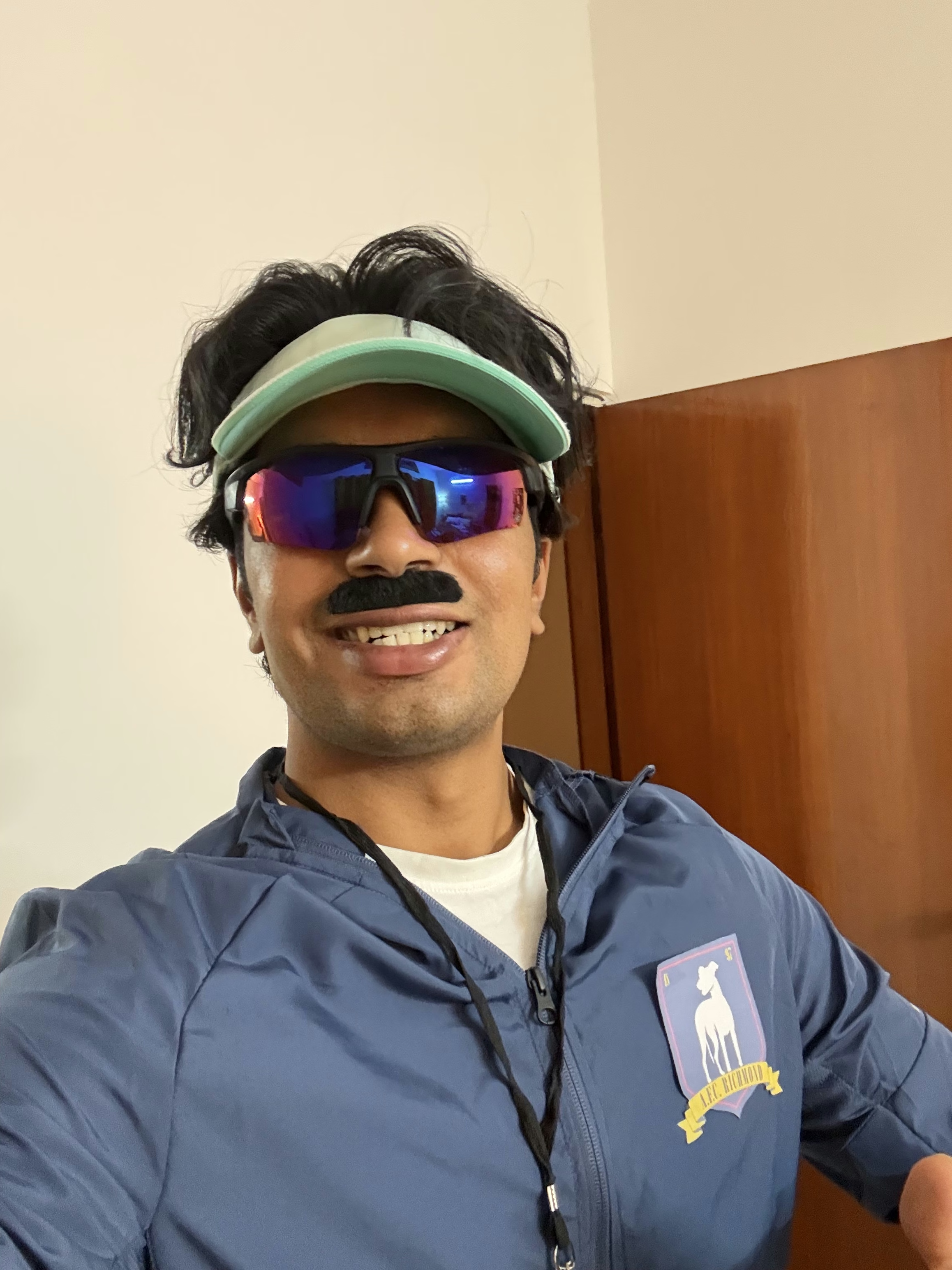
I’m Ishan Ambasta. I work on AI and internal tools at Alt Carbon, a company that removes carbon dioxide from the air by spreading crushed basalt on farmland.
Most of my work is making software that people who don’t care about software can use without help. At the moment that means The Portfolio Project: every colleague gets a personal site they can edit themselves and take with them when they leave.
I like websites that are small, fast and made of text. This one is my argument for them.
Work
- 2023 – now Software lead, Alt Carbon
- 2020 – 2023 Software engineer, FieldKit Labs
- 2018 – 2020 Data analyst, Monsoon Analytics
Now
Work
- Building The Portfolio Project: a personal website for everyone at Alt Carbon, which they keep when they leave.
- Prototyping three plain-text templates. You are looking at one.
- Testing Sveltia CMS as the editor and Cloudflare Workers as the host.
Reading
- Basin and Range, slowly.
- Rereading The Checklist Manifesto, because of a deployment checklist.
Life
- Long walks, fewer tabs.
Not doing
- New side projects, until this one ships.
updated 14 Sep 2026
September2026
| Mo | Tu | We | Th | Fr | Sa | Su |
|---|---|---|---|---|---|---|
| 1 | 2 | 3 | 4 | 5 | 6 | |
| 7 | 8 | 9 | 10 | 11 | 12 | 13 |
| 14 | 15 | 16 | 17 | 18 | 19 | 20 |
| 21 | 22 | 23 | 24 | 25 | 26 | 27 |
| 28 | 29 | 30 |
↑ last updated the Now note
On the nightstand
Reading list
What I’ve been reading, and what I’d pass on.
- How to Do Great WorkPaul GrahamThe one I send to new hires.
- An app can be a home-cooked mealRobin SloanSoftware for four people is allowed to exist.
- A Brief History & Ethos of the Digital GardenMaggie Appleton
- FastPatrick CollisonA list of things built quickly. Cheering.
- You and Your ResearchRichard HammingA 1986 talk that still reads like advice from a colleague.
- The Tail EndTim Urban
- Potential for large-scale CO₂ removal via enhanced rock weathering with croplandsBeerling et al., Nature, 2020The paper most of our field is built on.
- Inventing on PrincipleBret Victor, 2012Why tools should show you what they’re doing.
- VoltsDavid RobertsLong interviews about the energy transition.
- Works in ProgressMagazine
- CDR.fyiCarbon removal market dataWhere I check who bought what.
Items11
Thank you, come again
Research
- Preprint · EarthArXiv 2026An offline-first pipeline for soil sampling in enhanced rock weathering trialsMeera Iyer, Asha Rao, Daniel Okafor, Priya Nair
- Dataset · Zenodo 2025Soil cation measurements from basalt-amended rice paddies, 2024–2025Daniel Okafor, Asha Rao, Meera Iyer
- Talk · Field Data Workshop, Bengaluru 2025Designing forms for people who don’t want to fill them inAsha Rao
- Report · Alt Carbon technical report 2024Measurement, reporting and verification for enhanced weathering: a practitioner’s checklistPriya Nair, Meera Iyer, Asha Rao, Rahul Menon
Writing
- A website you keep when you leave2026Why every colleague should own their site, account and all.
- Plain HTML is a feature2026
- Forms are the product2026Most internal software is a form. Treat it like one.
- Offline-first forms for field teams2025
- What a carbon tonne is made of2025Rock, rain, soil samples and a lot of spreadsheets.
- Tools nobody asked for2025
- Boring softwareexample.com2024
Say hello
Email is best: ishan@altcarbon.com. I answer most things within a week. I’m always glad to hear from people building small tools for field teams.